Dates: 28/11/2024 - 19/01/2025
Address: 9 Usacheva St., Moscow
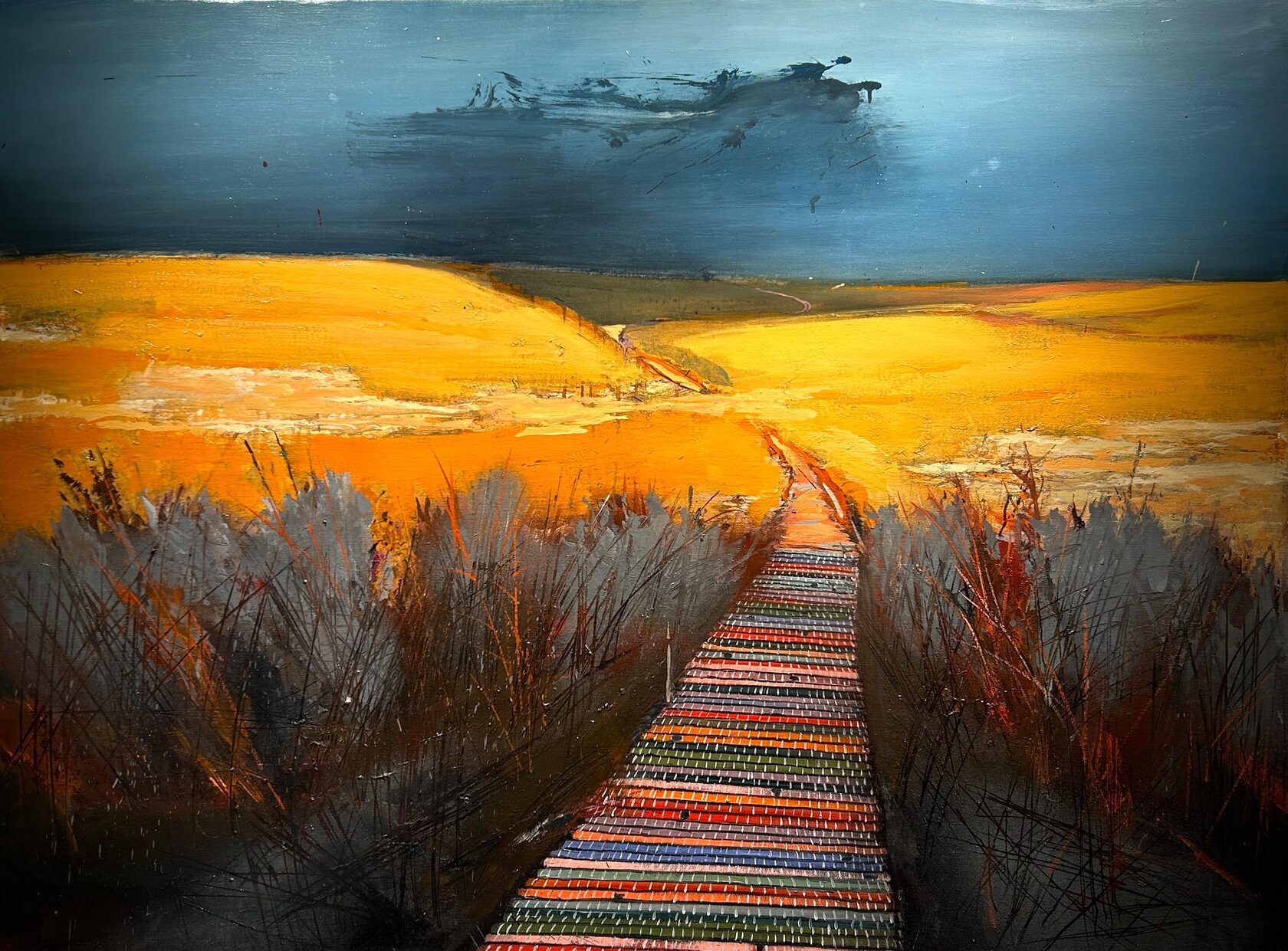
Vladimir Migachev's project "STILL LEBEN" is a contemplative, at times subjective gaze upon the processes that quietly reshape our reality and the very landscapes we occupy.
The artist consistently turns to the motif of the landscape—and to space in a broader sense—as a medium for contemplating profound questions: what forms our common cultural ciphers, how they endure through time, what lies behind the notions of "freedom" and "unfreedom," and whether a "quiet life" remains possible in our turbulent age.
In these works, space itself assumes a leading role. It is so immense, uninviting, and out of human scale that it exists almost independently, often in opposition to the human presence. Against such a backdrop, any architectural elements appear fleeting, as if rendered superfluous.
The "STILL LEBEN" series introduces a distinct detail—a rustic woven mat, a visual anachronism in modern reality, acting as a reminder of those elusive, intangible essences that make up our identity. It can be seen both as a naive attempt to conceal and beautify the flaws of space, and as a talismanic object that transports the viewer into a different realm.
The artist consistently turns to the motif of the landscape—and to space in a broader sense—as a medium for contemplating profound questions: what forms our common cultural ciphers, how they endure through time, what lies behind the notions of "freedom" and "unfreedom," and whether a "quiet life" remains possible in our turbulent age.
In these works, space itself assumes a leading role. It is so immense, uninviting, and out of human scale that it exists almost independently, often in opposition to the human presence. Against such a backdrop, any architectural elements appear fleeting, as if rendered superfluous.
The "STILL LEBEN" series introduces a distinct detail—a rustic woven mat, a visual anachronism in modern reality, acting as a reminder of those elusive, intangible essences that make up our identity. It can be seen both as a naive attempt to conceal and beautify the flaws of space, and as a talismanic object that transports the viewer into a different realm.