Dates: 03/09/2026 - 15/11/2026
Address: 9 Usacheva St., Moscow
There was no Hungarian Cosmism.
Cosmism was a Russian current that emerged at the turn of the nineteenth and twentieth centuries: Tsiolkovsky, Vernadsky. Humanity understood as part of a single process; mastery over nature and departure beyond the Earth as one and the same task. This movement never had a Hungarian chapter.
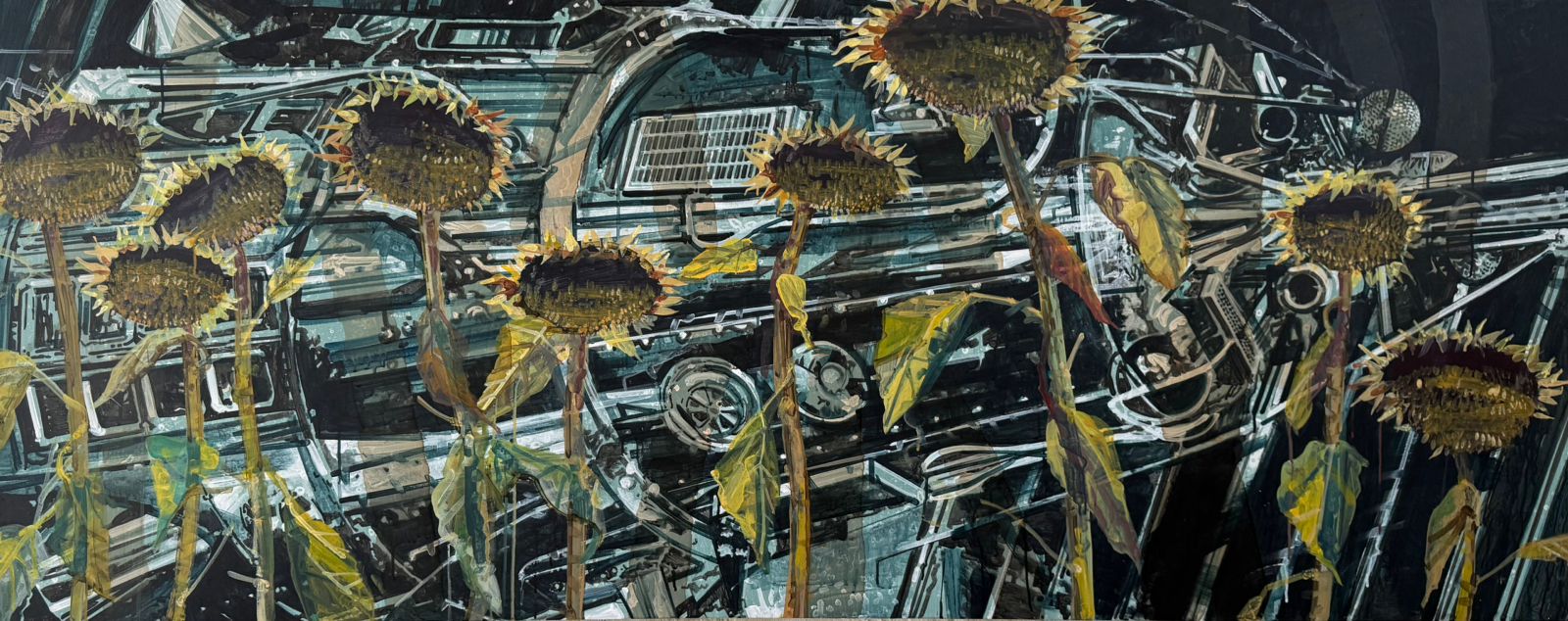
The project by artist Ilya Gaponov begins with the assumption that it did.
Hungary, the early 1970s. State farms adopt industrial systems of maize cultivation: American agricultural technology purchased with a foreign-currency loan, German combine harvesters, a closed production cycle. In 1970, the system operates on 5,700 hectares in Bábolna; a year later, on 29,000.
In May 1980, Bertalan Farkas enters orbit, becoming the first Hungarian in space.
In the midst of the Cold War, two utopias converged in a single cornfield: the Soviet space utopia and the American agro-industrial one. One promised a way beyond the Earth, the other mastery over its surface; both were based on the belief that the world was a mechanism that could be adjusted and perfected. The state itself described agriculture in the language of industry: iparszerű — industrial production. The person working in the field became part of the mechanism not in imagination, but according to the project documentation.
All that was missing was a philosophy capable of explaining what was happening there.
Machines built to conquer unknown planets move through fields of corn. The substitution happens effortlessly: the combine harvester and the lunar rover seem to have emerged from the same blueprint.
The only fiction here is the tradition itself. Everything else is archive.
Cosmism was a Russian current that emerged at the turn of the nineteenth and twentieth centuries: Tsiolkovsky, Vernadsky. Humanity understood as part of a single process; mastery over nature and departure beyond the Earth as one and the same task. This movement never had a Hungarian chapter.
The project by artist Ilya Gaponov begins with the assumption that it did.
Hungary, the early 1970s. State farms adopt industrial systems of maize cultivation: American agricultural technology purchased with a foreign-currency loan, German combine harvesters, a closed production cycle. In 1970, the system operates on 5,700 hectares in Bábolna; a year later, on 29,000.
In May 1980, Bertalan Farkas enters orbit, becoming the first Hungarian in space.
In the midst of the Cold War, two utopias converged in a single cornfield: the Soviet space utopia and the American agro-industrial one. One promised a way beyond the Earth, the other mastery over its surface; both were based on the belief that the world was a mechanism that could be adjusted and perfected. The state itself described agriculture in the language of industry: iparszerű — industrial production. The person working in the field became part of the mechanism not in imagination, but according to the project documentation.
All that was missing was a philosophy capable of explaining what was happening there.
Machines built to conquer unknown planets move through fields of corn. The substitution happens effortlessly: the combine harvester and the lunar rover seem to have emerged from the same blueprint.
The only fiction here is the tradition itself. Everything else is archive.